Operations & pipeline
We mine and process gold at Msesule, in the Lupa Gold Field (also written Lupa Goldfield), and sell the doré through Tanzania's official channels. We also trade gold under a dealer's licence and hold licences for manganese, copper–cobalt and nickel.
Msesule Gold
Mbeya Region, Tanzania.
The Lupa Gold Field, mined since 1922
Gold was discovered on the Lupa in 1922, in a remote part of south-western Tanganyika, and set off the territory's first gold rush. Alluvial working dominated the field until 1939, when reef mining overtook it. Informal mining continues in the area today.
Geologists describe the Lupa deposits as orogenic gold, hosted in quartz veins and shear zones that formed about 1.9 billion years ago at the south-western margin of the Tanzanian craton. Shanta Gold's New Luika mine, in neighbouring Songwe Region, has produced from the same goldfield since 2012. This regional geology and the neighbouring mine are not necessarily indicative of mineralisation at Msesule, which works at a far smaller scale.
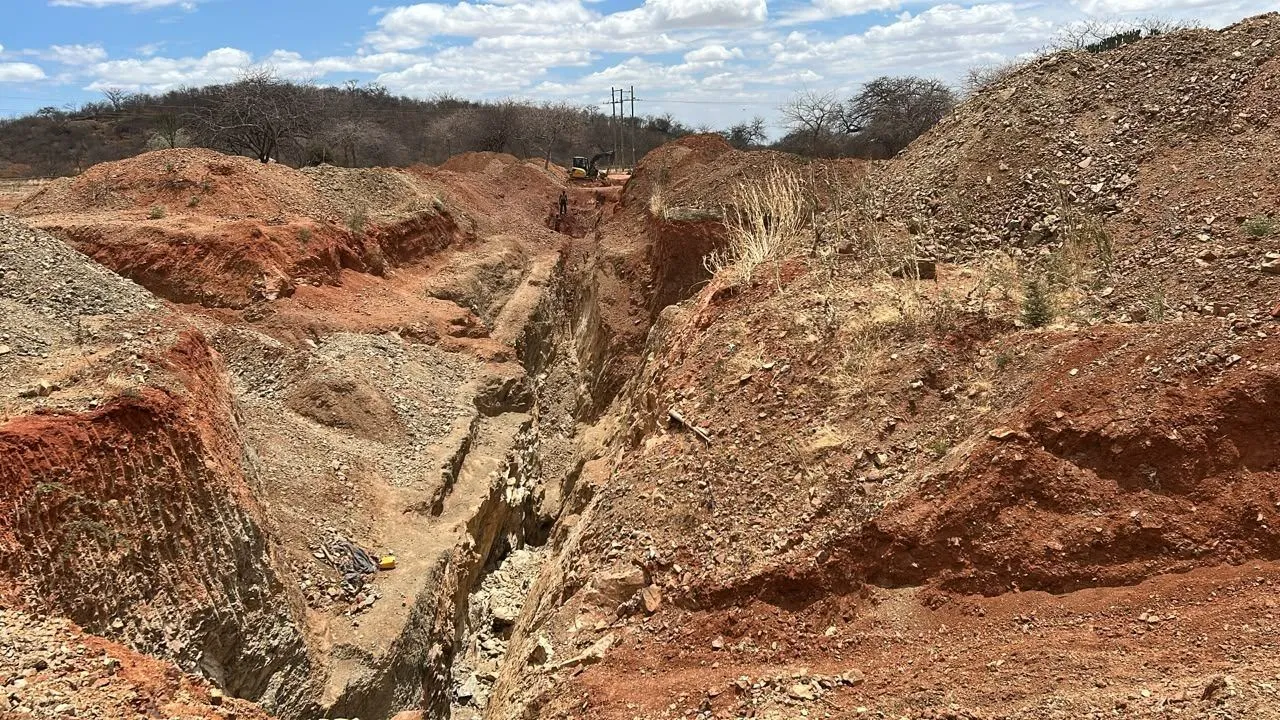
Mining: a mechanised trench along the vein
At Msesule we mine a gold-bearing vein from an open trench. Since 2025 we have mechanised the work step by step: 30-tonne and 5-tonne excavators strip the wall rock and expose the vein, and the crew sorts the ore before it goes to processing.
Processing on site, from ore to doré
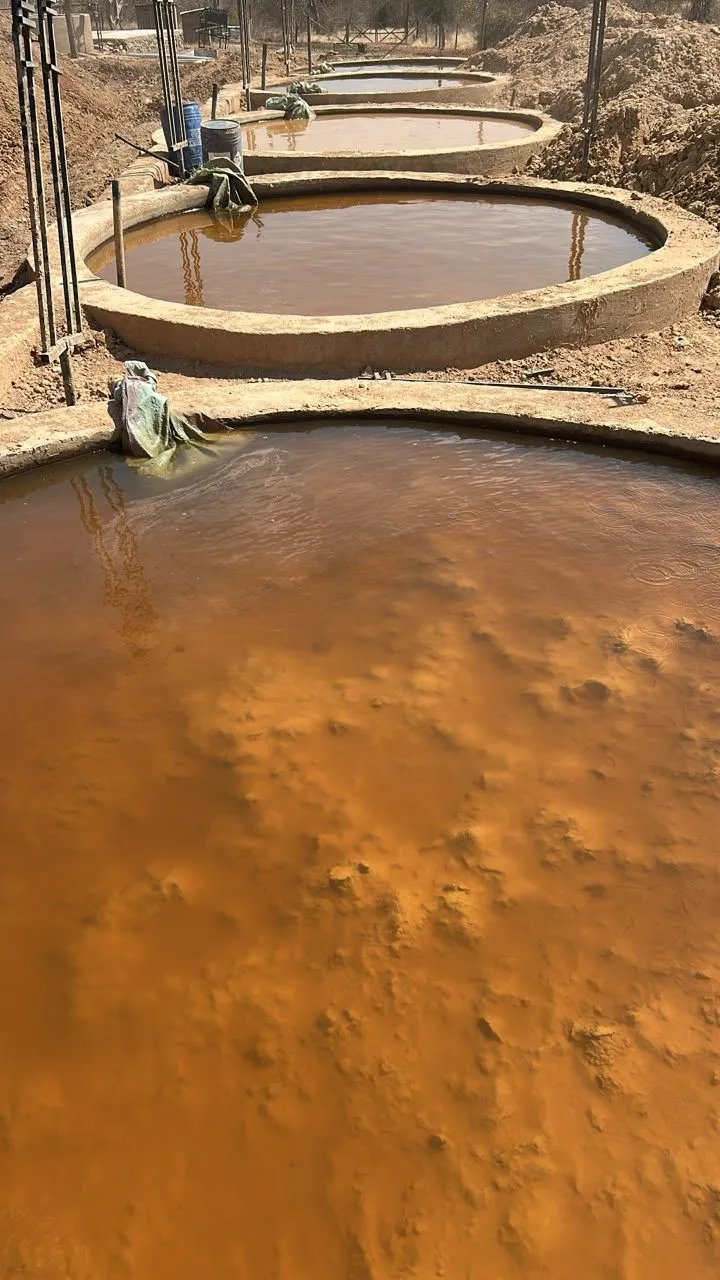
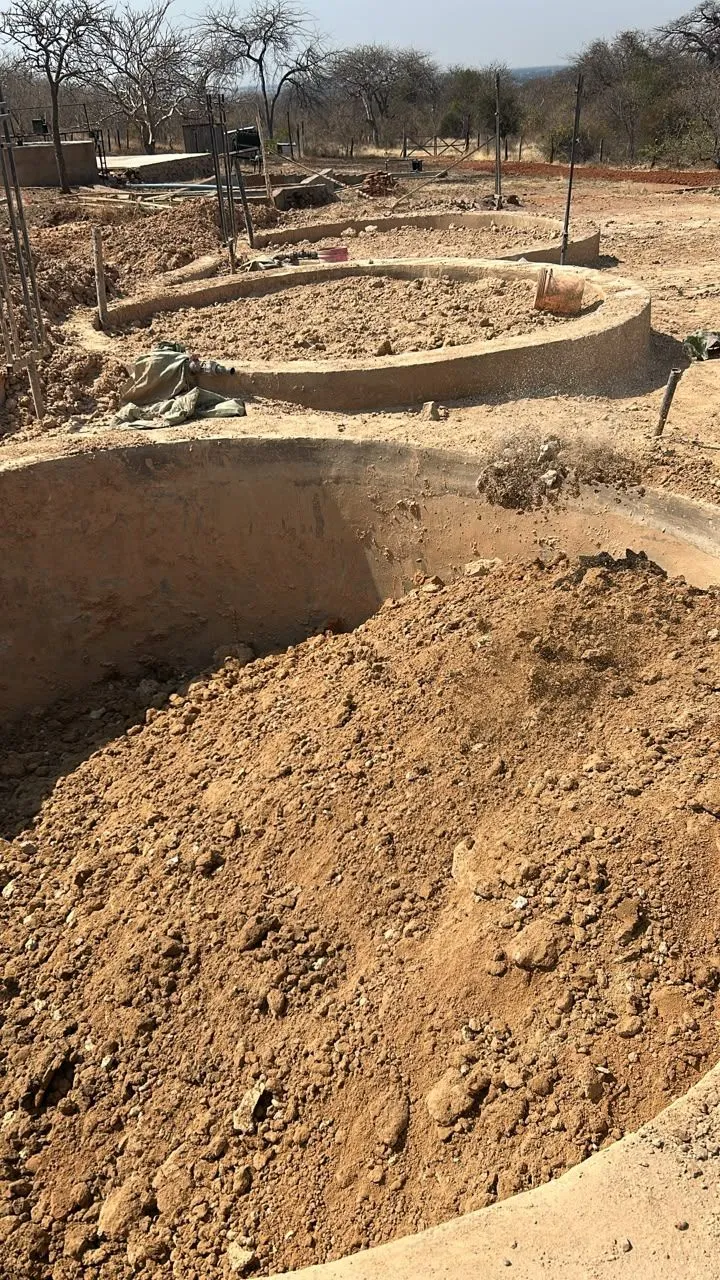
Our plant crushes and mills the ore, recovers gold by gravity separation, then leaches the milled ore with cyanide in five 30-tonne vats. We commissioned the circuit in September 2026, processed the first batch that month and have sold doré since then. Production is now ramping up.
We use no mercury, and a cyanide management plan has applied since commissioning. Our page on responsible operations at Msesule sets out the plan's controls.
Production figures are operator estimates. Mineral resource estimates are not compliant with JORC or NI 43-101 standards.
We publish no historical production figures. Qualified investors can consult the batch-by-batch metallurgical register under NDA.
Msesule has 30 employees, and the operator's expansion plan provides for around 50 at steady state (September 2026). Our Responsibility page covers recruitment, training and social cover.
Doré sales, including the Bank of Tanzania gold purchase programme
We sell our doré through Tanzania's official channels, including the Bank of Tanzania's domestic gold purchase programme.
According to the Bank's public notice of October 2024, all mineral rights holders and licensed dealers must offer 20% of their gold to this programme, under Section 59 of the Mining Act.
Third-party assays
The Tanzania Mining Commission Laboratory in Dar es Salaam assayed samples from Msesule in February 2026. A ground magnetic survey followed in April 2026. No mineral resource has been estimated, and no Competent Person has yet reviewed our technical information. An independent Competent Person is budgeted for the resource programme.
Timeline
-
Huudi Forest Company Limited set up to develop small-scale gold mining in the Mbeya Region
-
Step-by-step mechanisation of Msesule begins
-
Third-party assays, Tanzania Mining Commission Laboratory
-
Ground magnetic survey
-
Vat-leach circuit commissioned, first batch processed
Gold trading
Huudi Forest Company Limited also holds a gold dealer's licence and uses it today, buying gold within Tanzania's regulated market.
Pipeline: licensed mining projects in Tanzania
Beyond Msesule, we hold licences for three other minerals: manganese, copper–cobalt and nickel. We report each project's status and add detail once fieldwork supports it.
Manganese project
Tanzania · Manganese
Licensed project at development stage. A trial mining phase has been completed.
Copper–cobalt licences
Tanzania · Copper–cobalt
Licensed ground at exploration stage.
Nickel licences
Tanzania · Nickel
Licensed ground at exploration stage.
Gold production in Tanzania
Gold is Tanzania's largest goods export: it accounted for 45.7% of the value of goods exports in 2025, according to the Bank of Tanzania. The Ministry of Minerals reported national output of 67.8 tonnes of gold for the 2025/26 financial year.
The Mining Commission, established in 2017 under amendments to the Mining Act, regulates the sector. It issues licences for exploration, mining, processing and mineral trading, and inspects operations for safety, health and environmental protection through resident mine offices across the country.
Large international producers and a wide base of licensed small-scale operators work within this framework. Huudi Mining belongs to the second group.